The Mystical Tale of Sazar
- Ayesha Dikshit

- Dec 2, 2018
- 4 min read
“The beauty of Sazar stone lies in the fact that it looks like the stone has captured the beauty around it. Like an imprint of nature itself.”

Once upon a time, an Arab man was walking along the banks of River Ken in Uttar Pradesh. While strolling around the riverside, the Arab came across a beautiful stone, as he looked closely, he was mesmerized by the beautiful patterns on the stone. The patterns looked like a tree entrapped within it. The Arab astonished by the natural beauty, named it Sazar (meaning: tree in Arabic).
Ujjwal Agrawal, 21, (gem exporter from Banda District, U.P.) tells us more about this mystical stone. “Sazar is called Shazari Aqeeq in Arabic. Shazar means tree like or Dendrite and aqeeq means agate. Dendritic Agate is the holy stone of muslims, in Iraq they engrave Quran quotes on the stone and wear them. They are also used by the pilgrims of Haj.”
It’s been around 400 years since the discovery of Sazar, also known as dendritic agate. Found in the Banda District of Uttar Pradesh on the banks of River Ken, Sazar holds religious and spiritual significance. Its history can be traced back to the Mughal era. Mentioned in talismans and religious texts, Sazar has also been mentioned in the diaries of Bahadur Shah Zafar.
The journey of Sazar stone craft was started when a craftsmen was called from Maharashtra to the Banda District, to craft the beautiful stone and later Sazar took shape of ornaments. It was highly praised even during the colonial era and Sazar art was exhibited in front of Queen Victoria’s Darbar. After Independence of India, this craft vanished but was again revived by an Iranian businessman.
Hassan Shallani, Iran (Sazar stone jewellery retailer), tell us that Denritic Agate is mainly exported from India. "The beauty of Sazar, lies in the fact that it looks like the stone has captured the beauty around it. Like an imprint of nature itself. The tree like patterns which sometimes look like ferns, leaves, feathers and sometimes even the sun and moon are so distinct that no two agates can be similar. With a beauty that no other stone has; Sazar is like God’s own painting.”
Nature’s process of forming the patterned stone like its discovery, although scientific, is a spiritual and mystical tale. The patterns on the stones are either minerals or fossils of algae and fungus entrapped within, reacting with water overtime and producing a silica gel which coagulates two stones into one.
Many stories have been built around these naturally painted stones. And why not! Hidden beneath layers of gravel, the stones marry each other like two souls forming one.


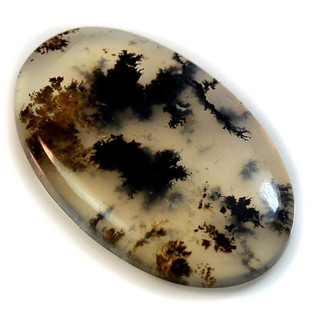


Sazar Stone (Scientific name - Dendritic Agate)
Ajmal, 24, (Nizammudin, Delhi) tells us, “In Sunni Muslims, shazari aqeeq holds no religious significance but maybe just some horoscopic value. But Shia Musilms give the stone high religious significance. From being placed with the body as a ritual during burials or worn as a holy ring passed down by forefathers, shazari aqeeq holds a lot of divine value. It is said that the stone chooses its owner and can bring strength and power with it or completely wane out the wearer if the pattern on the stone isn’t compatible with its owner’s soul.”
This beautiful piece of nature’s art is so unique that no two stones can be the same. Its ornamental use has been admired globally. A whole lineage of craftsmen was devoted to this art. As the entire process of finding, cutting, crafting the stone is an arduous process, the craftsmanship is passed like heritage to the future generations. Sazar being one of the hardest stones, its crafting is an intricate process.
Ujjwal whose family has been dealing with Sazar stone craft since centuries, told Lore, the reason behind the under-rated value of Sazar in the Indian market, “Even though, the stones are mainly exported from India, they are not famous here. It might be due to no astrological significance of the stone that it is hardly sold in its native land. People in India, wear stones by their horoscope, this is the reason why only birth stones are sold in India like Sapphire or Emerald.”
Unfortunately, this mystical tale of a mesmerizing stone, like a magical painting is now being forgotten due to the industrial times we live in. Even though the demand of Sazar stone is high in middle eastern countries due to religious linkages but the hands behind the crafted piece are underpaid and undervalued. The western countries also admire the dendritic agate’s beauty by turning the stones into beautiful pieces of jewellery, but the stone remains lost in its own land. Being of the water, Sazar exhibits its’ traits like genetic makeup. Sazar has survived for eras and travelled across countries, vanishing and reviving but never dead or extinct.
To save this nature’s art from being lost with time, Ujjwal takes down the memory lane. “My father and his father and many other people who were involved in the craft of Sazar were selling the stones to resellers in a very low price. Due to lack of education and no knowledge about the international market, all the artisans and miners involved were being undervalued. With no help from the government, the situation could not change. Two years ago, I got involved in the business and started my Instagram page (@godsownpaintings) through which I got connected with International buyers directly with the involvement of any third party. My first international buyer, Erin Nelson (jewellery designer), helped me a lot to revive the beauty of Sazar stone.”
Like so many other artisans in India, Sazar artisans are now diminishing due to low incomes and insufficient help from the government. Skilled craftsmen and artisans are suffering all over India and its time, we should take a step toward saving the rich and beautiful heritage art and culture of India.
Ujjwal added, “As now there is no third party involvement, the artisans and miners are paid double than they were paid 2 years ago. But there is still a long way to go. It is ironic that Sazar stone is undervalued and even unacknowledged in its own land.”
It is only the future generations like Ujjwal that can work to save the heritage art and culture that makes India, a mystical land.
Sazar stone should get the worthy praise, fame and admiration it deserves. Without the government’s help, the unique patterns of the stone will only remain a magical tale told. But maybe redeeming its true nature, the stone will be revived again in its land by some explorer unknown.


Comments